Loading Loading
img

Product Scale Up

  • Home
  • Product Scale Up
About
img

Transitioning Food Products from Development to Commercial Manufacturing

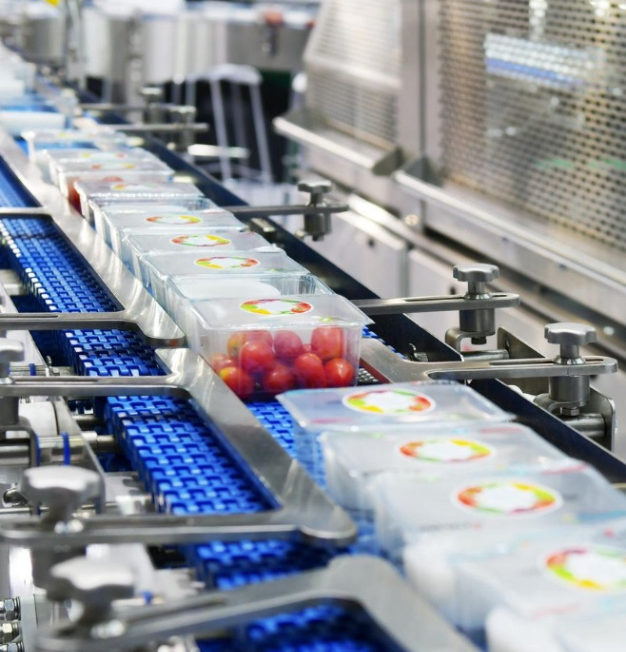
Moving a food product from laboratory development or pilot production into commercial manufacturing requires a structured engineering approach to ensure the product performs consistently at increased production volumes. Changes in equipment scale, processing conditions, heat transfer characteristics, mixing behavior, shear exposure, ingredient dispersion, moisture migration, and production timing can significantly influence the final product. Product Scale Up focuses on adapting food products and manufacturing processes so they can transition successfully into commercial food manufacturing environments while maintaining defined quality attributes, production efficiency, and product specifications. The objective is to eliminate uncertainty during commercialization by establishing technically validated processes that perform reliably under industrial manufacturing conditions.

Scale Up Engineering and Process Translation

Commercial manufacturing introduces physical and operational variables that are often not present during laboratory or pilot development. A formulation that performs successfully at a small scale may respond differently when exposed to industrial mixing systems, continuous processing equipment, larger thermal loads, different residence times, or increased production throughput. These differences can affect product texture, viscosity, stability, yield, appearance, and overall manufacturing consistency. Scale-up engineering evaluates these changes by analyzing how the product interacts with commercial equipment and process conditions, allowing technical adjustments to be made before full production implementation.

Commercial Manufacturing Process Development

Successful commercialization requires more than transferring an existing process into larger equipment. The manufacturing process must be engineered around the capabilities of the intended production system while maintaining the product characteristics established during development. This requires evaluation of equipment suitability, process sequence, production efficiency, operator requirements, and quality control considerations to create a process that is both technically effective and operationally practical.

Pilot Trial Planning and Production Validation

Pilot trials and production trials provide essential data for confirming that a product and process can successfully transition into commercial manufacturing. Without structured trial planning, important process variables may be overlooked, making it difficult to determine whether production challenges are caused by formulation limitations, equipment performance, or operating conditions. A technical approach ensures that trials generate meaningful information that can be used for process refinement and commercialization decisions.
Manufacturing Risk Assessment

Scaling a product introduces technical risks that may not be visible during early-stage development. Changes in equipment design, production speed, ingredient behavior, process conditions, and manufacturing environment can create unexpected challenges that affect product quality, production efficiency, or commercial viability. Identifying these risks before launch allows manufacturers to address potential issues through engineering adjustments rather than reactive troubleshooting after production begins.

About
img

Technical Deliverables

Depending on project scope, clients may receive:

• Scale-up assessment reports.
• Commercial manufacturing process recommendations.
• Process parameter documentation.
• Pilot trial plans and evaluation criteria.
• Production trial analysis.
• Equipment compatibility assessments.
• Manufacturing risk assessments.
• Process adjustment recommendations.
• Technical implementation documentation.
• Scale-up validation reports.

Supporting Successful Commercial Implementation

Product Scale Up provides manufacturers with the technical support required to transition food products from development environments into reliable commercial manufacturing operations. By evaluating the relationship between formulation performance, processing conditions, equipment capabilities, and production requirements, this service establishes a structured pathway for commercialization. The work delivered provides manufacturers with a technically evaluated scaleup strategy supported by engineering analysis, production trial interpretation, and practical manufacturing recommendations. Clients receive documented technical guidance that supports commercial implementation, reduces production uncertainty, and improves confidence that the product can be manufactured consistently at scale. The outcome is a validated approach to manufacturing that maintains product quality, supports operational efficiency, and provides a reliable foundation for long-term commercial production.